Employee portal

Employee portal

As a part of the SSO Digital Experience team we were tasked to enable a simpler experience to help Nedbank staff members manage work-related tasks such as initial on-boarding, HR requirements, leave requests, job transitions, IT related issues and more.

Team

Aaron Teng
Lumko Twala
Khadeejah Chopdat

Role

UX Design
UI Design
Research
Testing

Tools

Sketch

Year

Ongoing

Discover

Employee interviews

Employees shared that their current experience with the bank’s internal tools feels disjointed and cumbersome. They have to navigate multiple systems, each with its own interface and user experience, to complete routine work-related tasks.

For example, submitting a timesheet, updating annual goals, or logging a service request all require going to different platforms, making the process fragmented and confusing.

This fragmented experience often leads to frustration, especially when employees are pressed for time, and can negatively affect how they feel about working at Nedbank.

GBS Group business services interviews

The GBS team has observed a growing trend in the queries it receives. According to GBS, many employees struggle to perform daily work‑related tasks due to the fragmented nature of the internal tools and platforms.

The team noted that employees often have difficulty locating certain tools or understanding where to go for specific tasks. As a result, staff frequently log queries with GBS simply to find the right system or resource. In other cases, employees have trouble navigating the tools due to a confusing user experience and poorly designed interfaces, prompting them to seek GBS support just to complete basic tasks.

This situation not only impacts employee productivity and experience, but also takes up a significant portion of the GBS team’s time and resources — time that could be better spent addressing more serious or complex requests.

Human Resources interviews

The HR department has also been inundated with requests from employees who struggle to complete basic HR‑related tasks, such as logging leave, downloading their payslip, or reporting an incident.

According to the HR team, many staff members have difficulty finding the right tool or form for these tasks, or navigating the platforms once they locate them.

As a result, employees often reach out to HR directly for help — even for routine activities — placing additional strain on the team. This situation not only impacts employee productivity and experience but also diverts HR’s time and resources away from higher‑priority and more complex issues.

As-is state

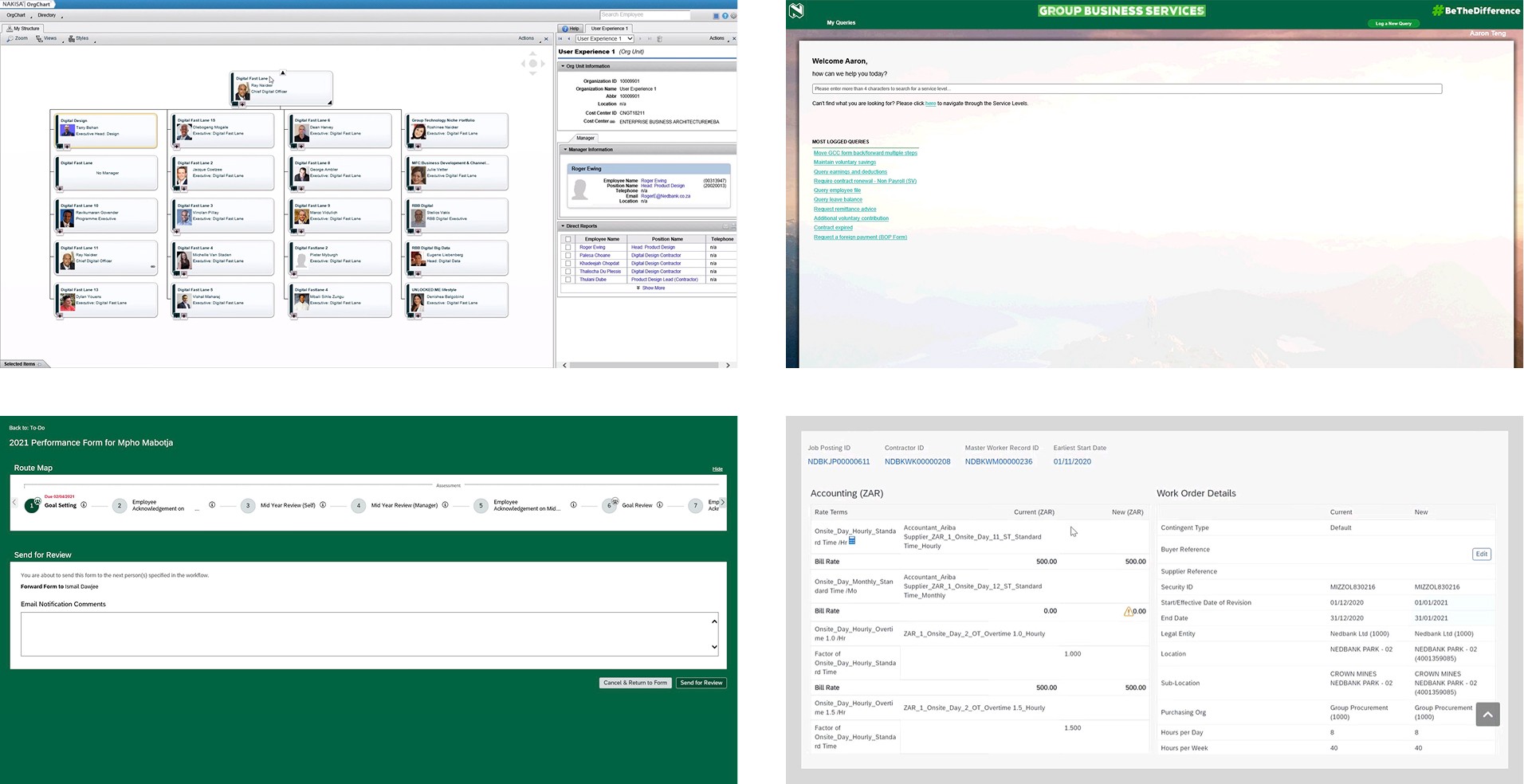
The images below illustrate how employees must navigate across four separate platforms to complete different tasks — such as accessing the org chart, logging a service request, setting goals, or submitting a work order. Each platform has its own interface and user experience, adding to the overall complexity and inconsistency.

Competitor analysis

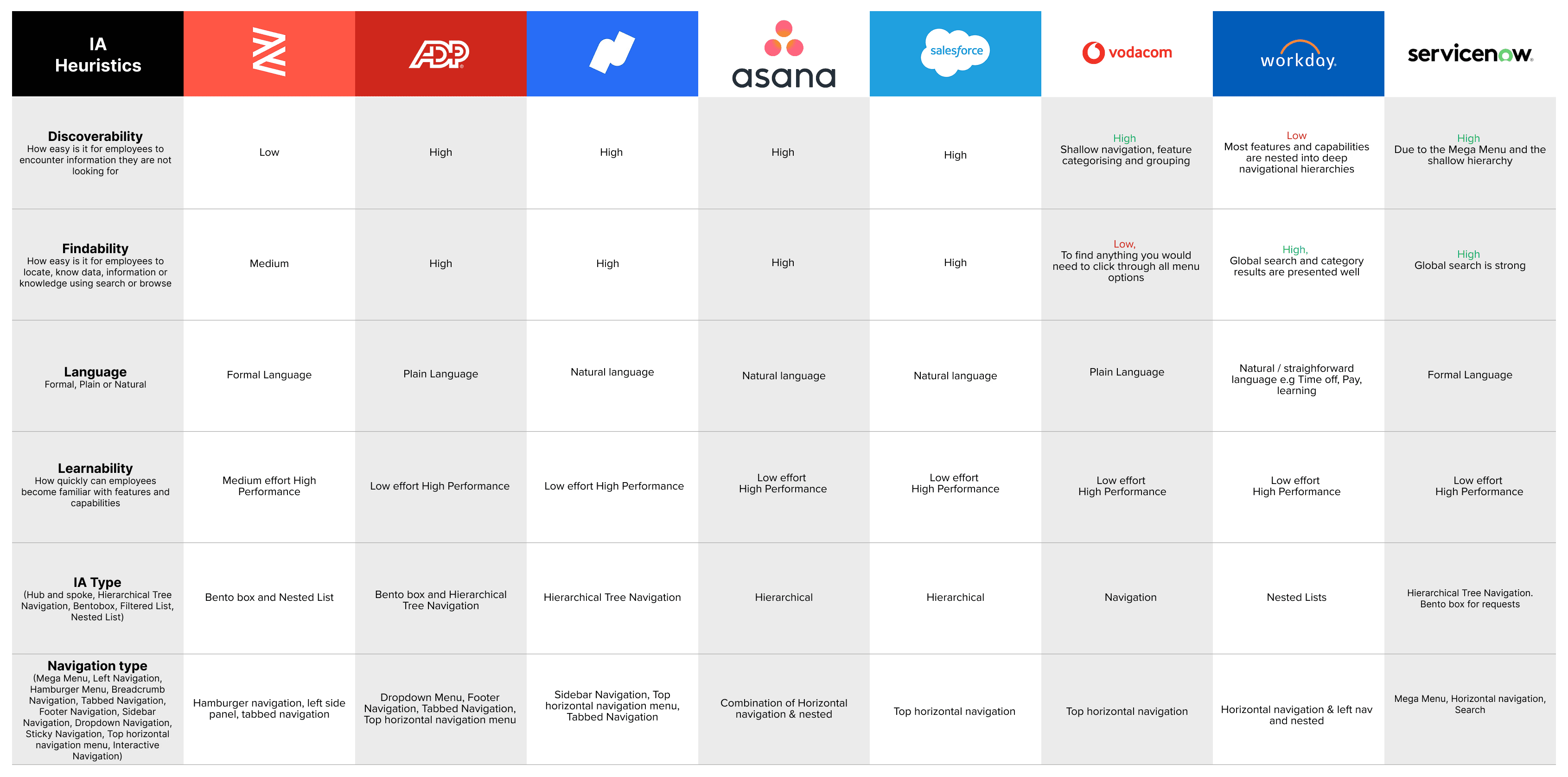
As part of the research for building our employee portal, we reviewed platforms such as Zenefits, Namely and ADP. These products offer valuable insights into best practices for user experience, information architecture, and feature design in the HR and employee self‑service space.

Evaluating their approach to navigation, data accessibility and overall user experience helped identify opportunities for creating a more seamless and intuitive employee portal tailored to our organization’s needs.

Industry Context

This challenge extended beyond Nedbank. A 2023 Gartner survey found that 47% of digital workers struggle to find the information needed to effectively perform their jobs. Additionally, research shows that 90% of employees are frustrated by their workplace technology. The fragmentation and complexity of multiple workplace systems was a widespread problem affecting employee productivity across enterprises.

References: Gartner (2023) - "Gartner Survey Reveals 47% of Digital Workers Struggle to Find the Information Needed to Effectively Perform Their Jobs". Freshworks - "Survey: Nine in 10 Employees are Frustrated by their Workplace Technology".

Define

Problem statement

Employees across the bank — from head office staff and line managers to bank tellers and receptionists — struggle to complete daily work‑related tasks due to fragmented internal platforms, inconsistent user interfaces, and unclear navigation.

This results in confusion, delays, and an increased reliance on GBS and HR support, impacting both employee productivity and overall experience.

Personas

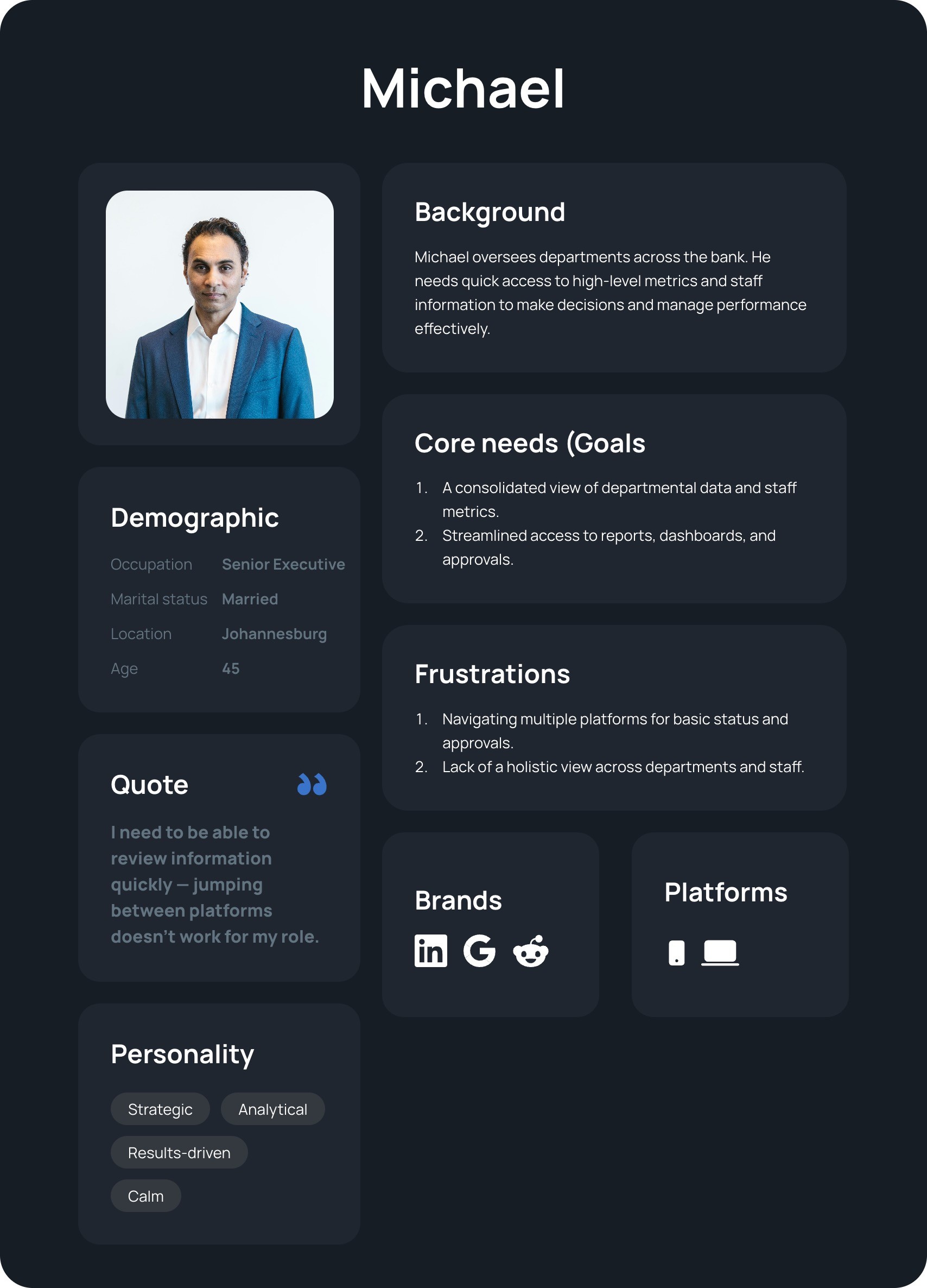
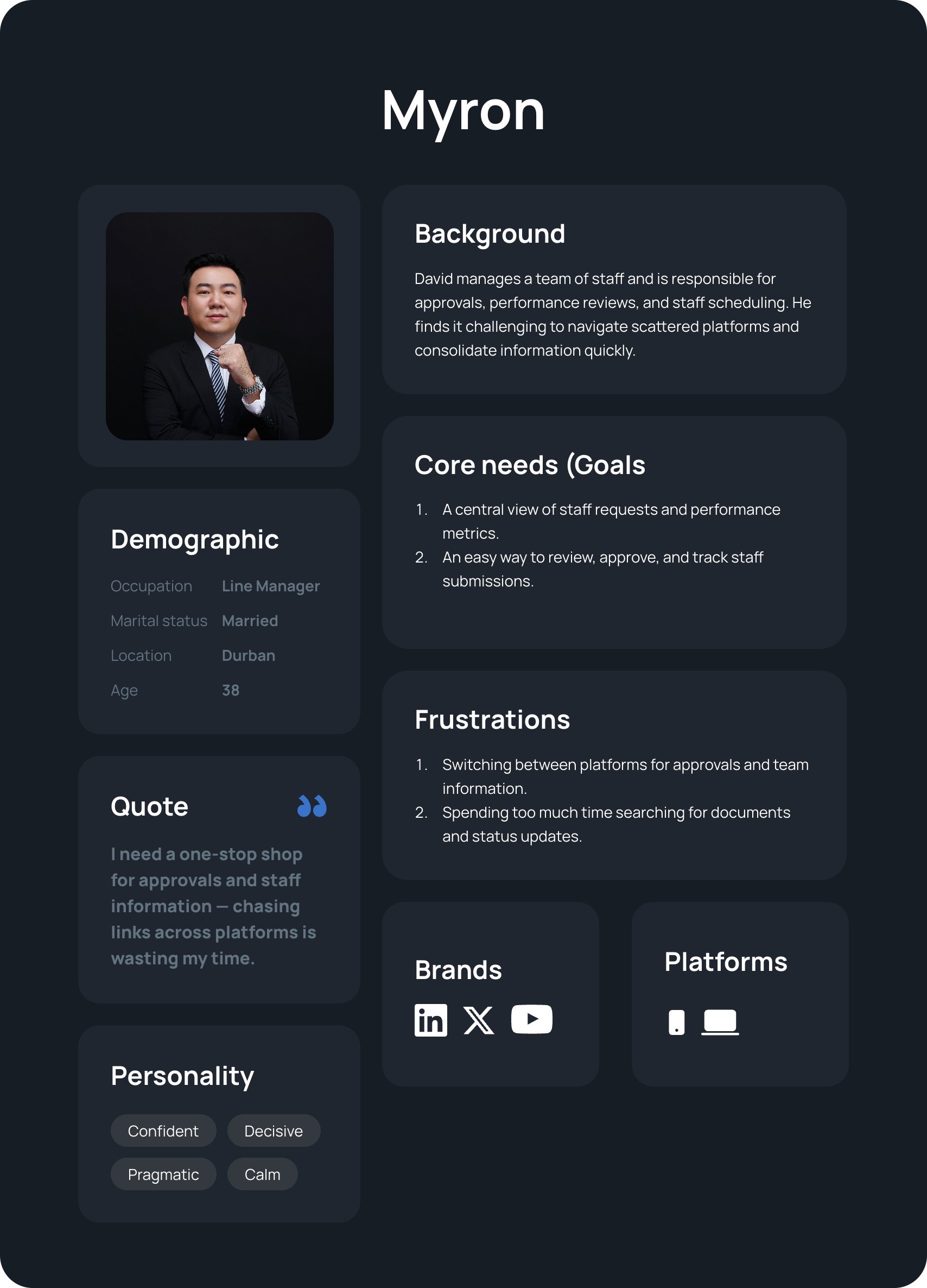
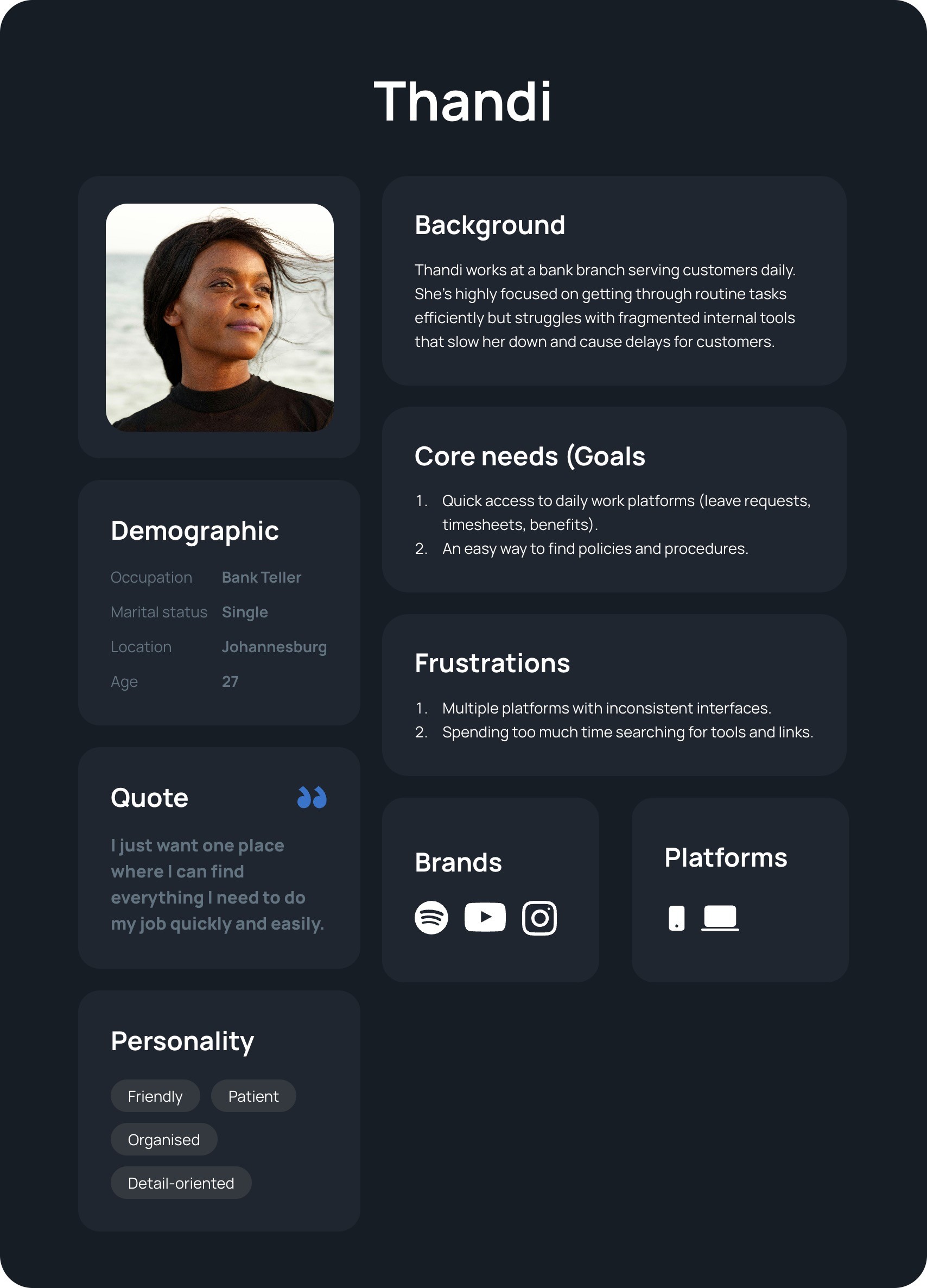
Using the interviews we conducted in discovery, we created a set of personas ranging from frontline tellers and line managers to HR staff and Senior executives. Here we captured the diverse needs, pain points and goals across these persona types, ensuring our design decisions were aligned with the daily realities of all employee roles.

User journey map

We attempted to map the current employee experience across existing internal platforms but found that a true user journey doesn’t really exist. Each platform operates in isolation forcing staff to move between disconnected systems to complete everyday tasks. This fragmented experience leads to confusion, delays and frustration highlighting the urgent need for a more seamless and consolidated approach.

Ideate

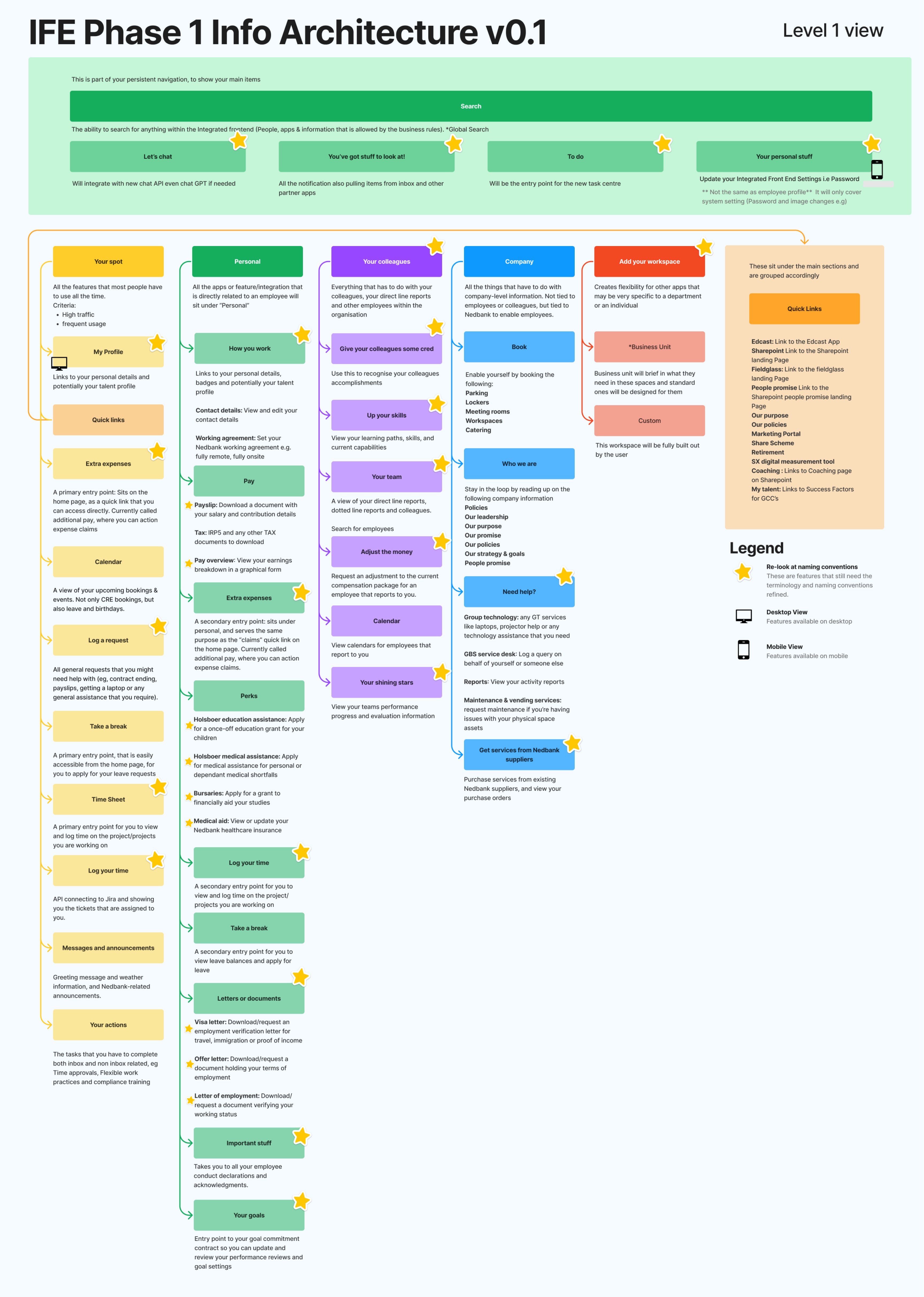
Information architecture taxonomy and navigation

Once we identified the complete list of features, we used it to design the information architecture of the employee portal.

To do this, we conducted tree sorting, card sorting and usability tests, ensuring the structure was intuitive and aligned with how employees naturally search for and use these tools.

In addition, we researched best practices for navigation design and tested our proposed navigation styles with employees to confirm their clarity, ease of use, and overall effectiveness.”

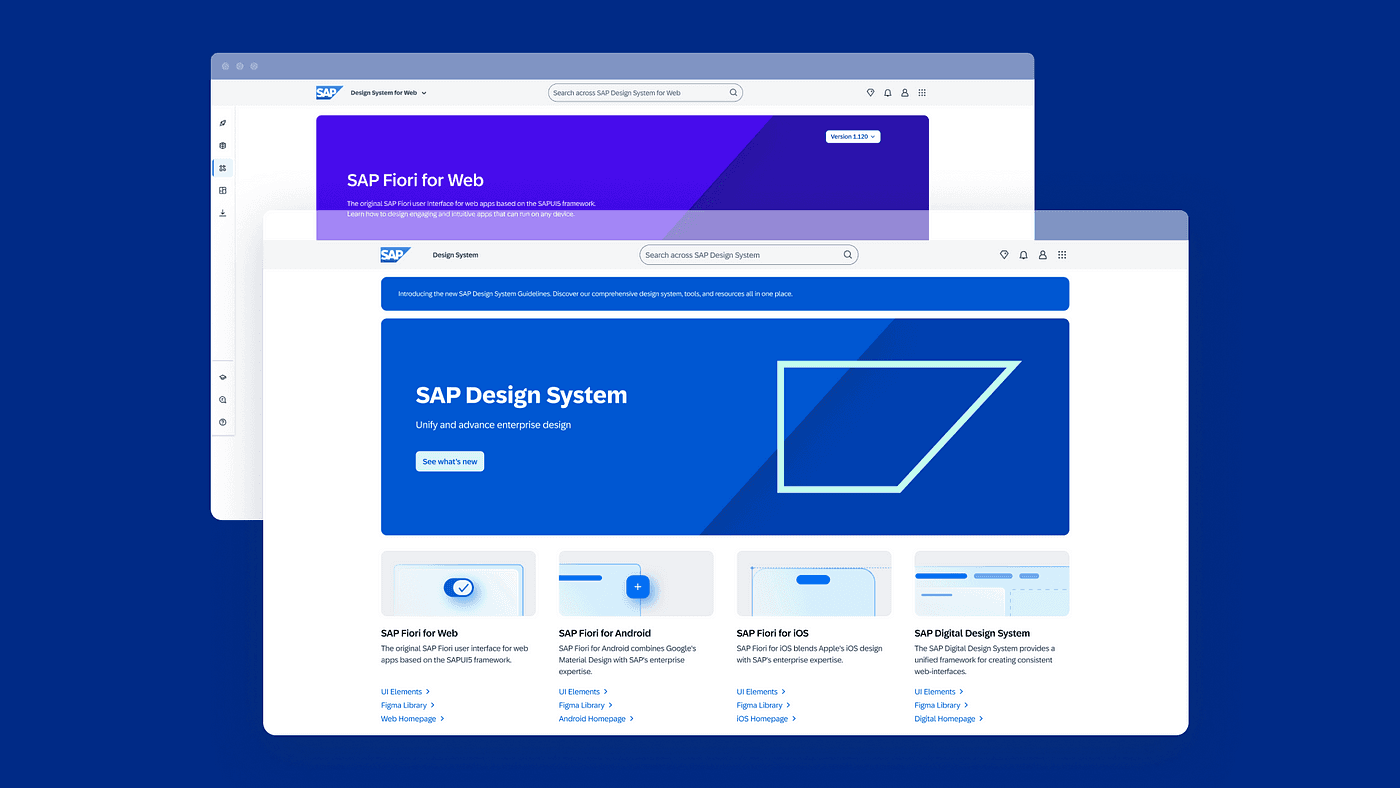
SAP Design System

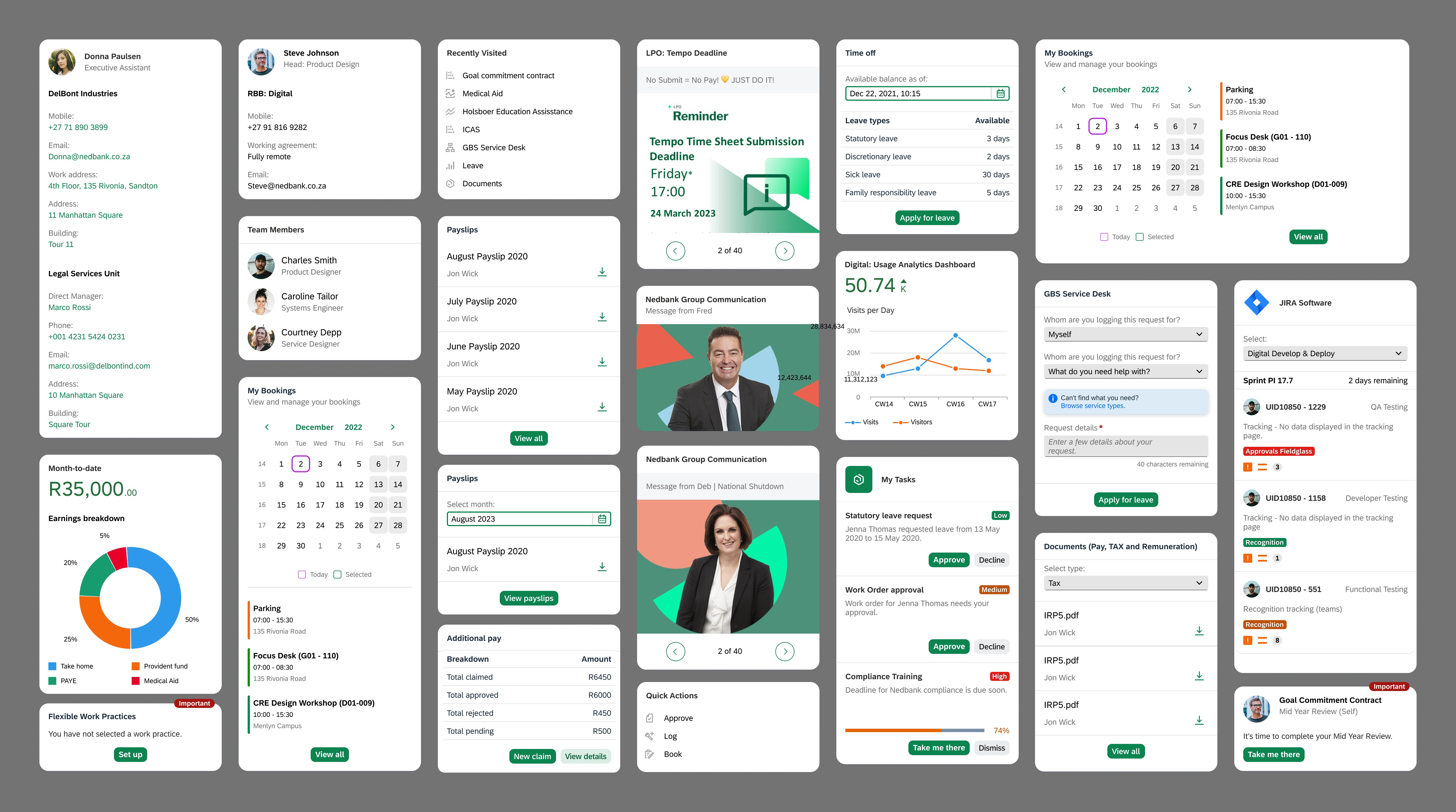
The employee portal was built on the SAP platform, which required us to utilize the SAP Design System as the foundation for its user interface. While we adhered to SAP’s established design guidelines, we also customized and extended these patterns to fit the bank’s specific needs — ensuring the final experience was both aligned with SAP best practices and tailored to the unique requirements of our employees.

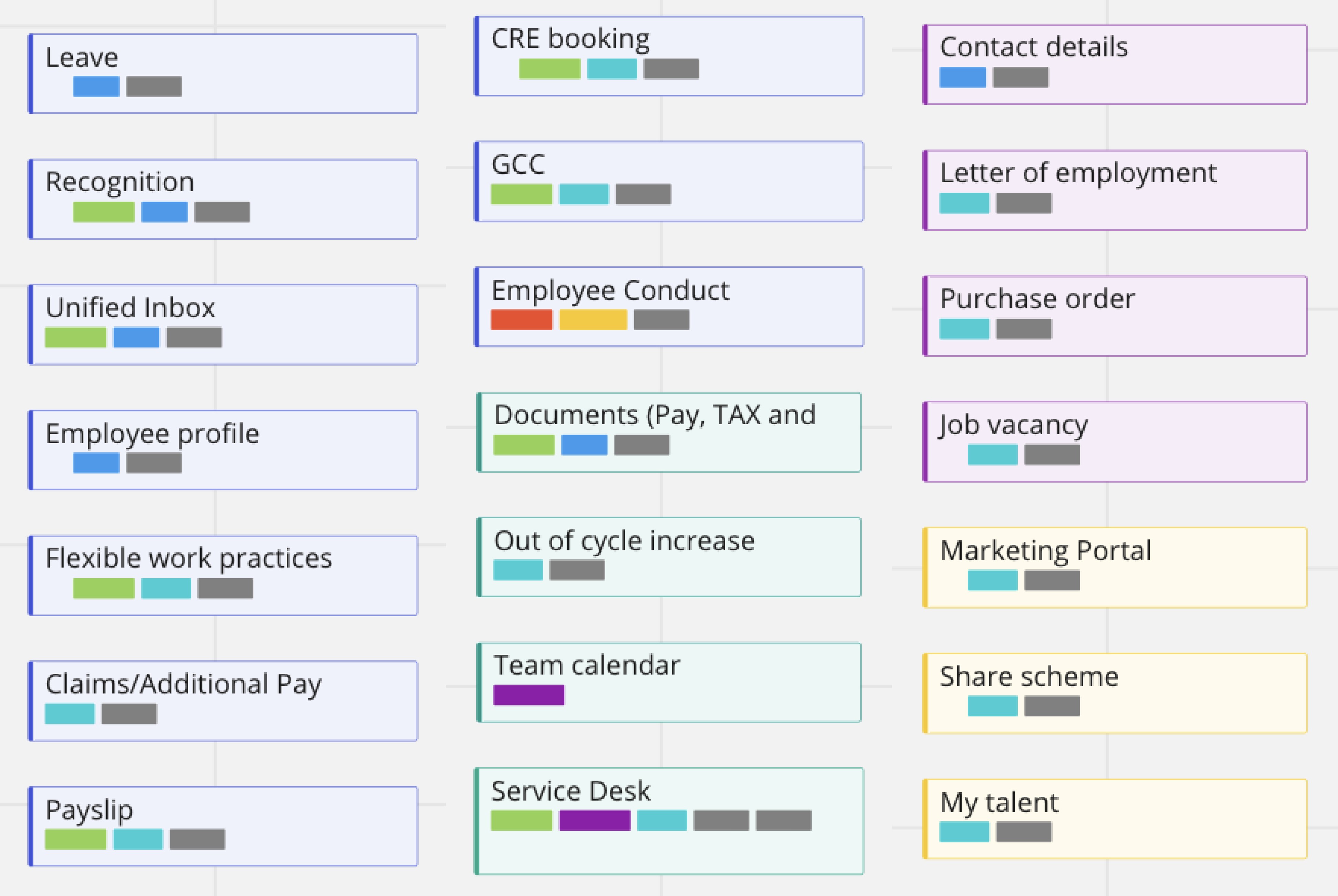
Feature list

We audited the organisation’s existing platforms and compiled a comprehensive list of features currently scattered across multiple systems. This allowed us to define which of these should be brought together within a single, unified employee portal.

Prototype

High fidelity prototype

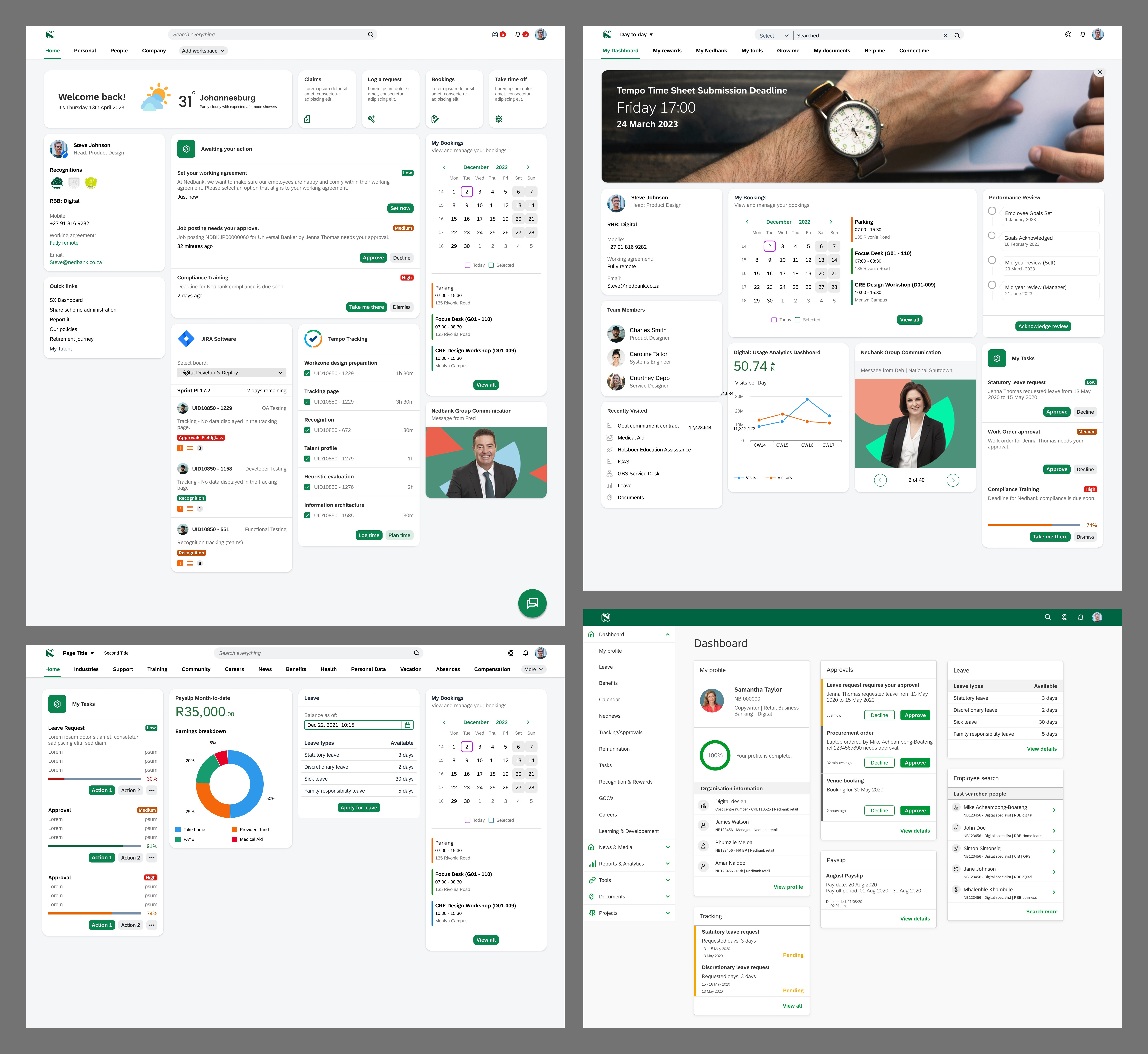
Throughout the Prototype phase, we created multiple iterations of the employee portal, exploring different layouts, navigation structures and ways for users to access key features.

These iterations were refined based on feedback and testing, allowing us to design an experience that was both intuitive and aligned with how employees naturally search for and use the tools they need.

Test

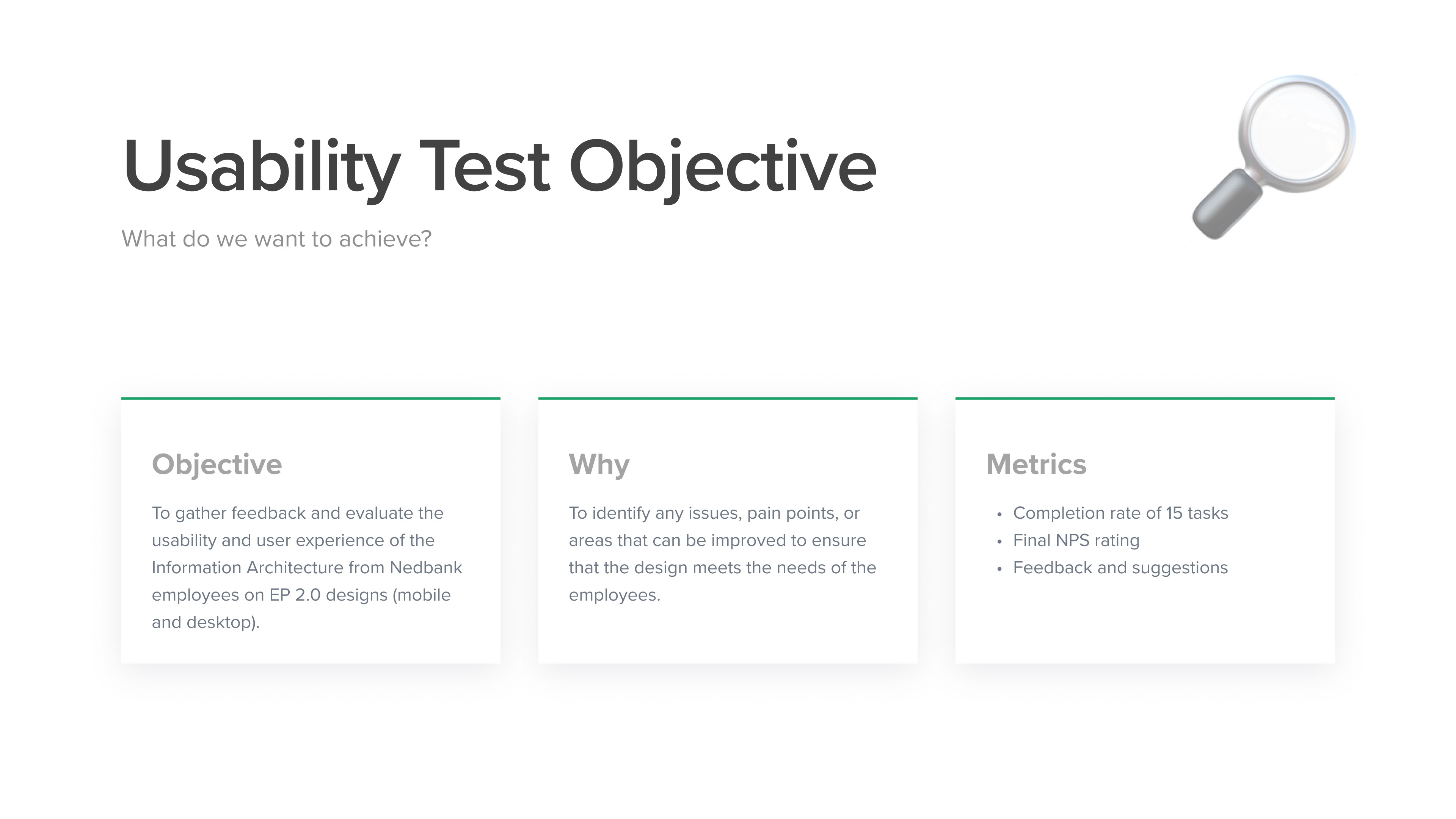
Usability test

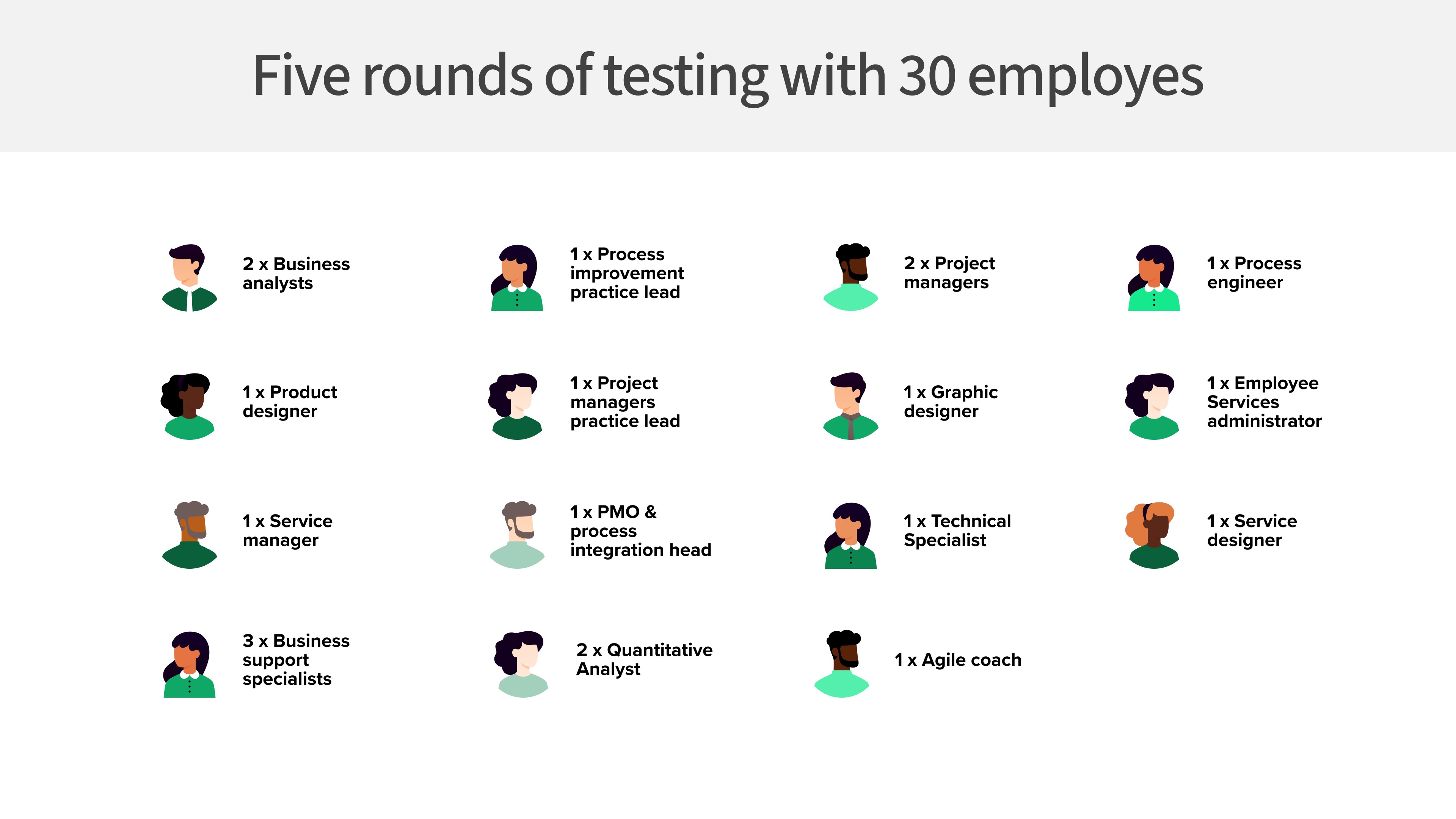
We conducted remote testing sessions with 30 participants from across the organization, representing a range of roles and departments.

These sessions allowed us to observe how staff interacted with the new employee portal, gather their feedback and assess its overall ease of use.

The insights gained from this testing were invaluable in refining the design to ensure it met the needs of employees and delivered a seamless, user‑friendly experience.

Impact

Analytics

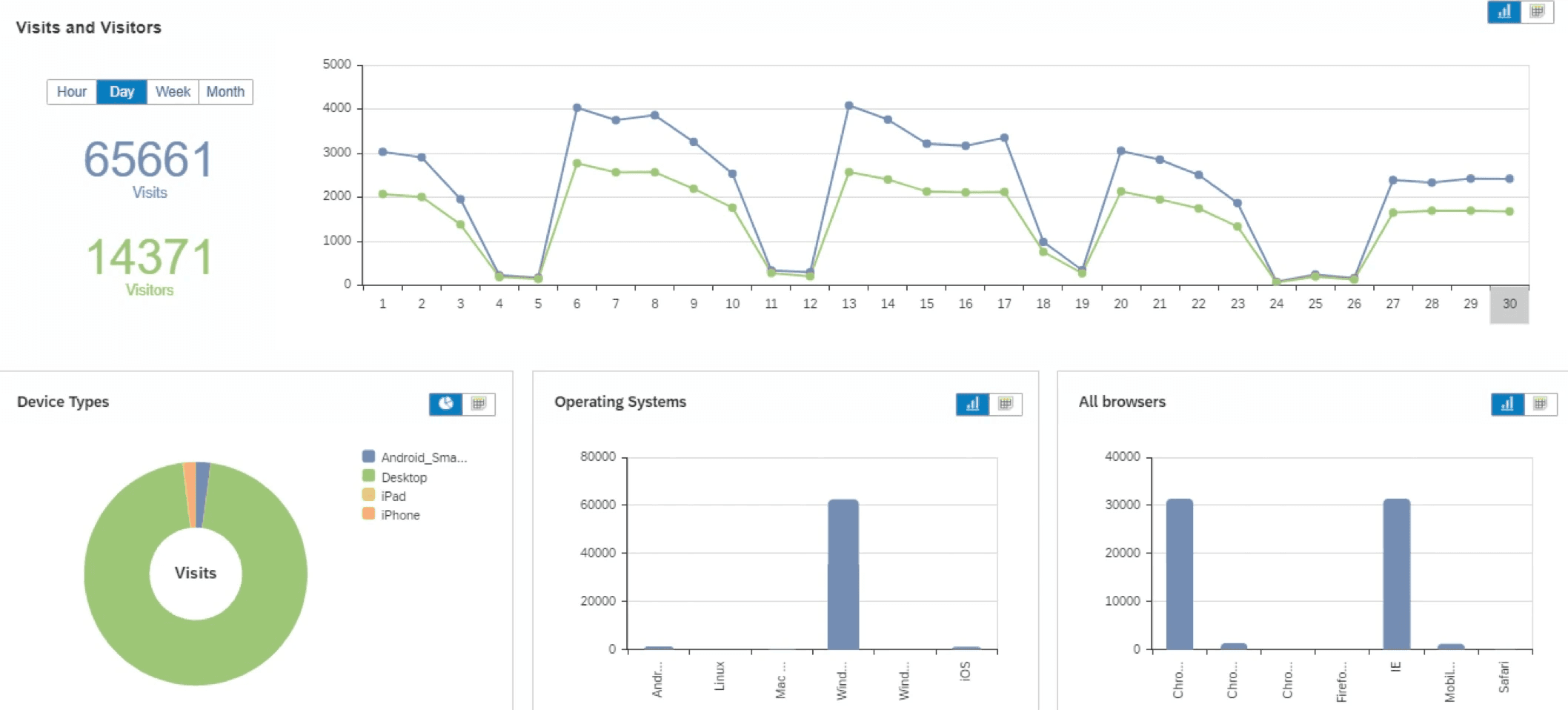
Since its launch, the employee portal has quickly become an integral part of daily work across the bank. Within the first two months, it was averaging over 60,000 daily visits — a strong indicator of its adoption and value.

This level of engagement reflects the portal’s role in simplifying access to tools and information, reducing friction in everyday tasks and supporting a more productive and connected workforce.

Reflections

Insights, learnings and key takeaways

This project was a rewarding reminder that while we often focus on the products we create for customers, it’s as important to focus on the experience we create for our employees.

The Employee Portal gave us the opportunity to make employees daily work lives better, knowing that happier employees lead to a stronger reputation and better outcomes for the bank.

Building the portal on SAP presented its own challenges, as we had to work within platform limitations while integrating fragmented legacy systems.

Even now, new features are being added and optimized. Yet this project reaffirmed the value of putting people first and designing with their needs in mind, creating a foundation that will continue to evolve and deliver impact across the organization.